ManageEngine unlocks new recognition in the Gartner® Magic Quadrant™
With more devices, more OSs, and more locations, endpoint management has entered a new phase. For IT teams, managing endpoints has become one of the most complex and resource-intensive responsibilities in the enterprise. The challenge is no longer just managing devices; it's doing it proactively, securely, and at scale, all while reducing operational burden.
We feel, the 2026 Gartner® evaluations underscore this shift. ManageEngine has been named a Challenger in the 2026 Gartner Magic Quadrant™ and scored above four across all four Use Cases in the Gartner Critical Capabilities Report for Endpoint Management Tools, which in our view reflects Endpoint Central’s ability to unify endpoint management and security and its progress toward becoming an autonomous, scalable management platform.
This blog breaks down what this Gartner recognition signifies to us and why it matters for enterprises navigating the next phase of endpoint management.
ManageEngine named a Challenger: What Gartner evaluation reveals
This year marks the introduction of the Magic Quadrant for the endpoint management market, and the evaluation analyzed the market landscape and the vendors' Completeness of Vision and Ability to Execute. We believe our recognition as a Challenger reflects not just Endpoint Central’s evolution into a unified, autonomous platform but also its execution strength, automation-driven product strategy, and operational resilience.
ManageEngine’s scores across Gartner Critical Capabilities Use Cases
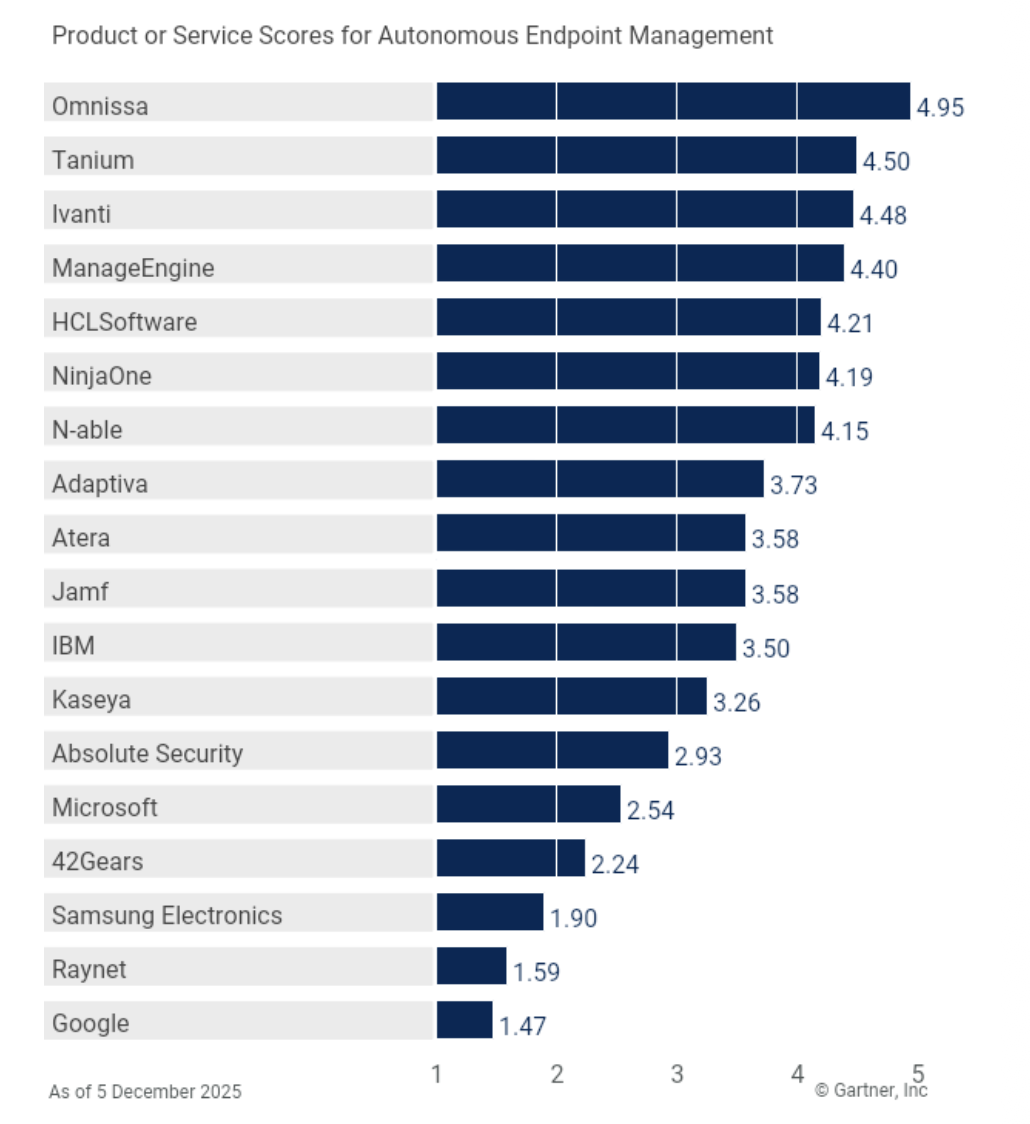
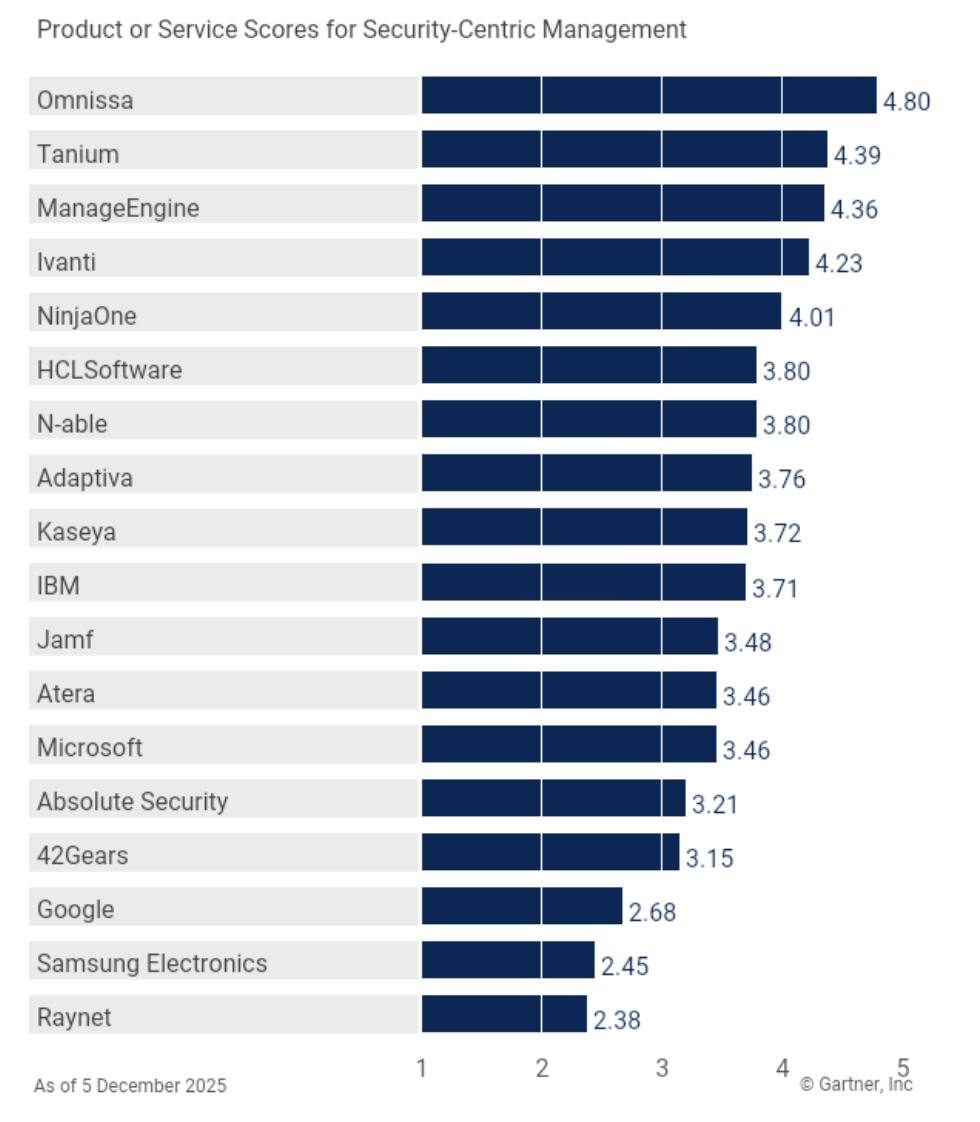
In the companion report, the 2026 Gartner Critical Capabilities for Endpoint Management Tools, ManageEngine has received scores above four across all four Use Cases: Autonomous Endpoint Management, Unified Endpoint Management, Security Centric Management, and Frontline Device Management.
ManageEngine Endpoint Central scored 4.40/5 in Autonomous Endpoint Management The platform also scored 4.36/5 in Security Centric Management and 4.25/5 in Frontline Device Management , while receiving a score of 4.1/5 in Unified Endpoint Management
Unified Endpoint Management
Consolidates the complete device life cycle from provisioning and configuration to monitoring, troubleshooting, and retirement, into a single, unified console, reducing tool sprawl and enabling consistent management across diverse OSs and device types.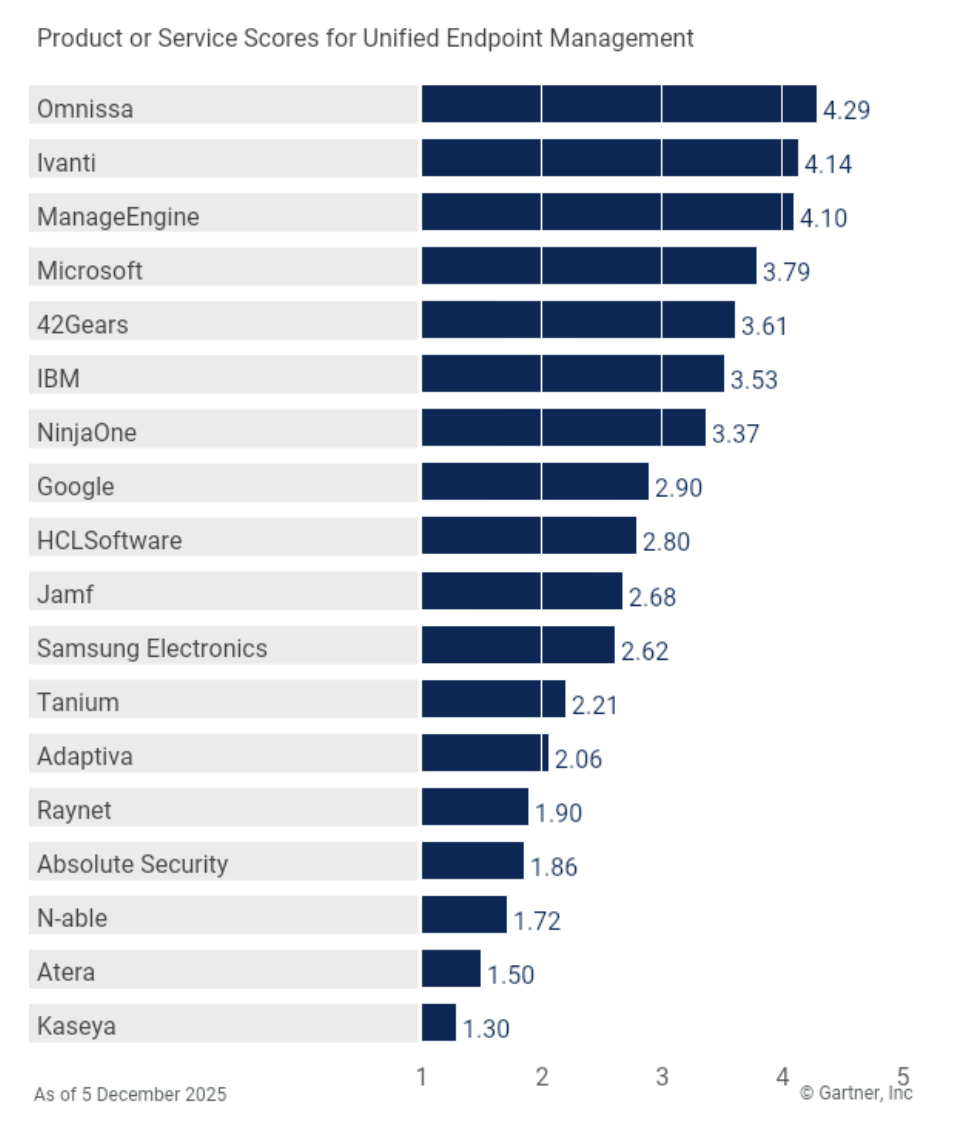
Autonomous Endpoint Management
Combines endpoint analytics, automation, and visual workflows to help IT teams anticipate issues, orchestrate remediation, and progressively move from reactive operations to more proactive and autonomous endpoint management at scale.
Security-Centric Management
Integrates endpoint management and security workflows through policy-driven controls, configuration enforcement, and timely patching, helping organizations reduce risk, strengthen security posture, and maintain compliance across distributed environments.
Frontline Device Management
Extends centralized control to shared, kiosk, rugged, and task-specific devices, enabling role-based administration, policy enforcement, and visibility that support reliable and secure frontline operations without increasing administrative complexity.
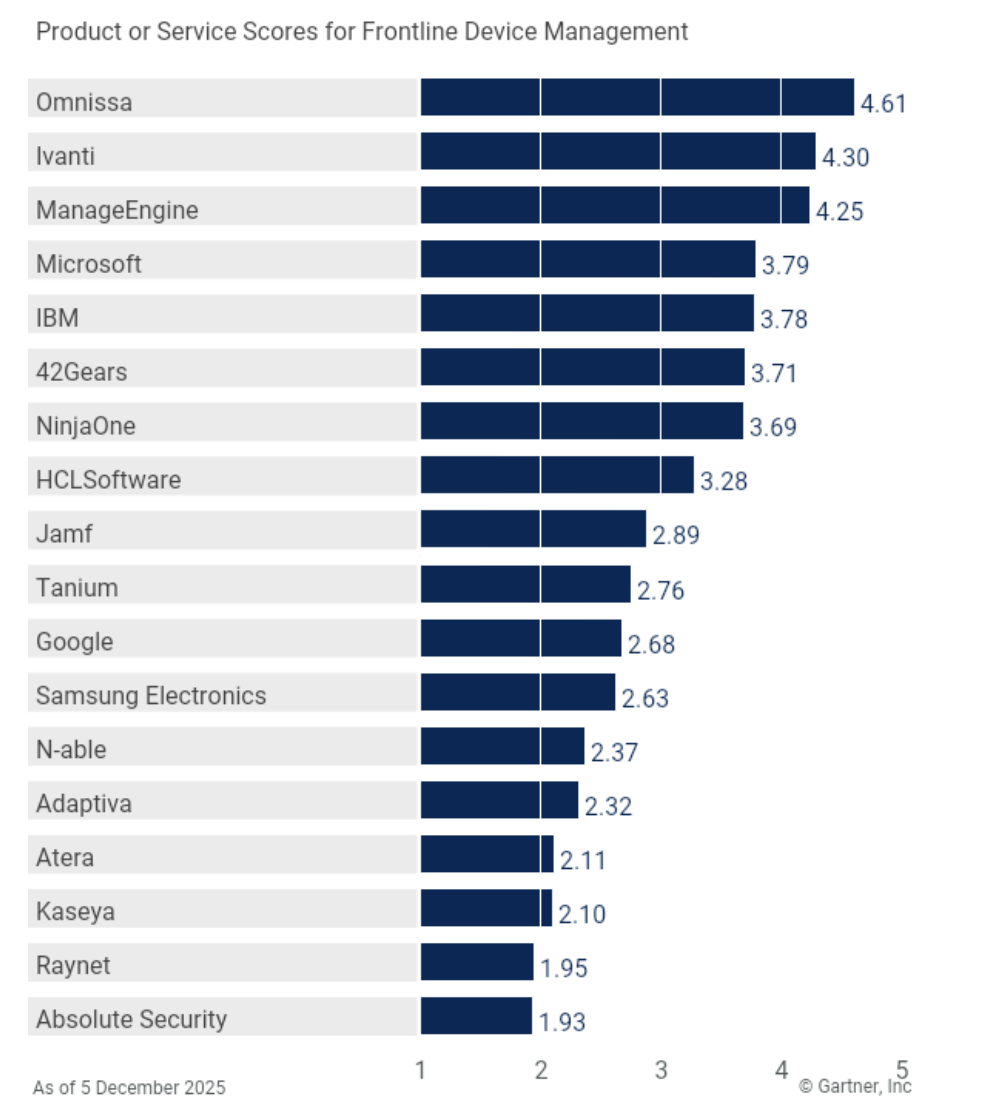
Explore the full Gartner Critical Capabilities report here.
This evaluation reflects a broader shift in how endpoint management platforms are being evaluated, in our view. As organizations manage an increasing number of devices, OSs, and distributed workforces with lean IT teams, expectations have expanded beyond basic device management. IT leaders now require unified, automation-driven platforms that reduce operational effort, prevent disruptions, and support proactive, autonomous operations.
In response to these changing expectations, organizations are redefining the role of endpoint management. Endpoint Central helps IT teams:
Unify and streamline endpoint operations
Manage the complete life cycle of devices from provisioning and configuration to monitoring, troubleshooting, and retirement, through a single, integrated console. Endpoint Central eliminates tool fragmentation replacing multiple disjointed tools with a single, unified console that streamlines IT workflows, and enables consistent management across Windows, macOS, Linux, ChromeOS, mobile devices, and specialty endpoints.
Improve efficiency with automation, orchestration, and intelligent insights
Automate routine tasks, deploy patches and software at scale, and leverage analytics to detect issues early. Visual workflows help IT teams orchestrate proactive, reactive, and predictive actions, reducing manual workloads and improving operational efficiency.
Strengthen security posture and maintain compliance at scale
Identify vulnerabilities, enforce configurations, and ensure timely patching through insights and policy-based controls. Endpoint Central transforms endpoint management by unifying operational and security workflows, closing gaps, minimizing risk and ensuring a consistent, compliant endpoint environment.
About Endpoint Central
Endpoint Central is a unified endpoint management and security platform that enables enterprises to manage and secure their modern digital workplace across diverse device types and OSs through a unified console and agent.
We support the end-to-end life cycle management of devices and complement this with our security capabilities like attack surface management, threat detection and response, compliance and built-in digital employee experience insights. Robust remote troubleshooting, self-service capabilities, and proactive analytics help reduce downtime and improve the overall end-user experience.
Explore how Endpoint Central supports proactive, automation-led endpoint operations across today’s distributed environments.
Disclaimer
Gartner, Magic Quadrant for Endpoint Management Tools, By Tom Cipolla, Lina Al Dana, Sunil Kumar, Robin Milton-Schonemann, Todd Larivee, Craig Fisler, 5 January 2026
Gartner, Critical Capabilities for Endpoint Management Tools, By Lina Al Dana, Tom Cipolla, Sunil Kumar, Robin Milton-Schonemann, Craig Fisler, Todd Larivee, 5 January 2026
Gartner and Magic Quadrant are trademarks of Gartner, Inc. and/or its affiliates.
Gartner does not endorse any company, vendor, product or service depicted in its publications, and does not advise technology users to select only those vendors with the highest ratings or other designation. Gartner publications consist of the opinions of Gartner’s business and technology insights organization and should not be construed as statements of fact. Gartner disclaims all warranties, expressed or implied, with respect to this publication, including any warranties of merchantability or fitness for a particular purpose.