ManageEngine recognized across two 2026 Gartner® Magic Quadrant™ reports for Endpoint Management and DEX

We're pleased to announce that ManageEngine has been recognized in the 2026 Gartner Magic Quadrant for Digital Employee Experience (DEX) Management Tools, evaluated on the strengths of DEX Manager Plus—our standalone Digital Employee Experience Management solution. Earlier this year, ManageEngine was also named as a Challenger in the Gartner Magic Quadrant for Endpoint Management Tools.
To us, this recognition reflects a broader capability story. The same DEX capabilities are also natively available in our flagship endpoint management solution, Endpoint Central.
For us, this recognition is meaningful. It's not because we've arrived, but because it confirms we've been building the right things. DEX has been a deliberate, multi-year product investment for our team, and seeing it acknowledged in a formal industry evaluation tells us our customers' trust has been well-placed.
What is the Gartner Magic Quadrant for DEX?
Gartner evaluates vendors on the basis of their Ability to Execute and Completeness of Vision. As per Gartner, “This research helps IT leaders responsible for DEX evaluate a DEX tool that delivers measurable improvements across technology performance, employee sentiment, and operational outcomes.” The DEX Magic Quadrant specifically assesses tools that help IT teams monitor, measure, and improve the digital experience of employees—from device health and application performance to endpoint remediation.
Experience monitoring was always next, and Gartner recognized that
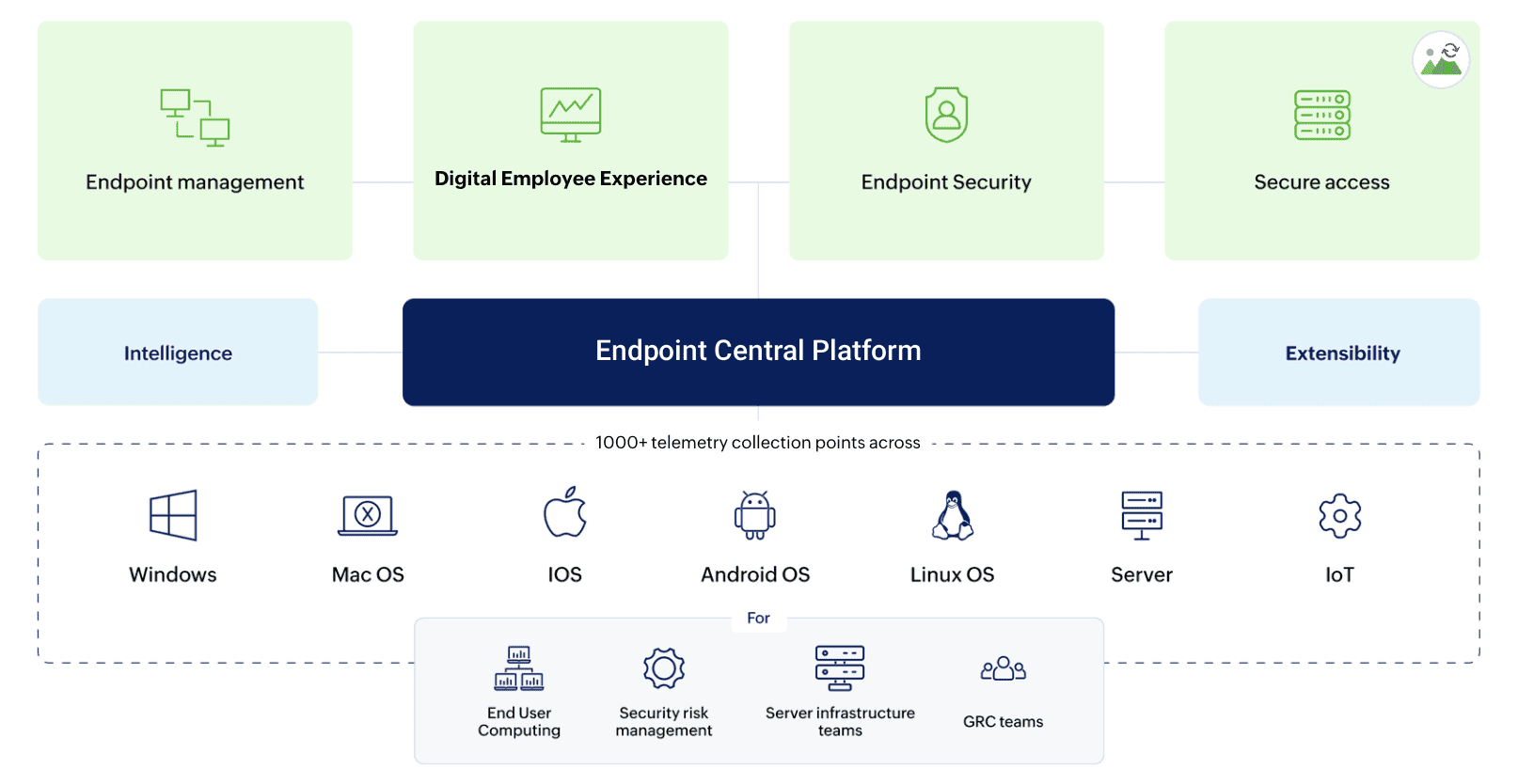
More than two decades ago, the vision was set at building a unified platform that addresses anything and everything that's endpoint: routine IT tasks, cybersecurity, End-User Computing (EUC), and GRC. What started as a client management tool, over time, matured into a unified endpoint management tool, layered in with security and access controls. That's because managing endpoints without securing them is only half the job done.
Today, virtually all work happens on an endpoint, and when the experience is poor, productivity takes a hit. Historically, even though IT teams knew it, they lacked the visibility and tools to act on it proactively.
Hence, the next progression. Incorporating experience monitoring into a mature remediation platform was, as always, our way of responding to what the IT teams needed the most. Today, when an endpoint problem affects the experience, we don't stop with the detection; rather, a full-fledged remediation without the need for a context switch.
Gartner's evaluation recognized exactly this. We think our inclusion in the Magic Quadrant is a direct reflection of the maturity of a platform that closes the loop between detection and remediation—all from a single console.
Our perspective: What this means and what comes next
Digital Employee Experience as a formal market is still maturing. As a company that has always focused on long-term R&D and its products shaped by where enterprise IT is headed, we believe this recognition is less of a destination and more of a confirmation that the course we were already on was the right one.
The tools Gartner assessed range from purpose-built DEX platforms to unified endpoint management products with DEX overlays. Endpoint Central sits firmly in the latter, which gives us a structural advantage: Our DEX capabilities are native to the same platform your IT team already uses for patching, software deployment, remote support, and compliance.
That convergence matters, because the endpoint experience isn't a single metric; it's a collection of signals. When most of those signals are already flowing through the platform, collecting and contextualizing them stops being an integration challenge and starts being a design choice.
When a user reports an app crash, Endpoint Central doesn't just log the event: It correlates it with system telemetry, scores the endpoint's experience health, and can trigger a remediation workflow, all within a single platform.
Our 2026 roadmap continues to deepen these native capabilities, including: Expanding AI-assisted administrator experience improvement to reduce the mean time to resolution, broadening application-level coverage to web apps, and making it easier to act on insights rather than just observe them.
We're building toward a zero ticket model where our DEX capabilities can resolve a performance issue before the affected employee even notices it. For common endpoint issues today, we already support trigger-based deployments and automated actions that remediate known problems, preventing many issues from ever becoming tickets.
For emerging issues, we are expanding our telemetry-driven remediation and making it more guided and outcome-oriented.
A DEX approach built around your organization
Our approach to streamlining digital employee experience isn't a one-size solution. Based on where your organization is today and what you need to prioritize, we offer two distinct solutions:
Endpoint Central—our all-in-one unified endpoint management solution with native Digital Employee Experience, and DEX Manager Plus—our standalone cloud-only DEX solution.
Both products share the same underlying telemetry and scoring philosophy. The right choice depends on your IT stack and how central DEX visibility is to your immediate priorities. Either way, you're not starting from scratch - the data model, the health scoring framework, and the remediation engine are consistent across both.
Gartner, Magic Quadrant for Endpoint Management Tools, Tom Cipolla, Lina Al Dana, et al., 5 January 2026
Gartner, Magic Quadrant for Digital Employee Experience Management Tools, Dan Wilson, Stuart Downes, et al., 8 June 2026
GARTNER and MAGIC QUADRANT are trademarks of Gartner, Inc. and/or its affiliates. Gartner does not endorse any company, vendor, product or service depicted in its publications, and does not advise technology users to select only those vendors with the highest ratings or other designation. Gartner publications consist of the opinions of Gartner’s business and technology insights organization and should not be construed as statements of fact. Gartner disclaims all warranties, expressed or implied, with respect to this publication, including any warranties of merchantability or fitness for a particular purpose.