The invisible visitor: Why the internet is no longer just for humans
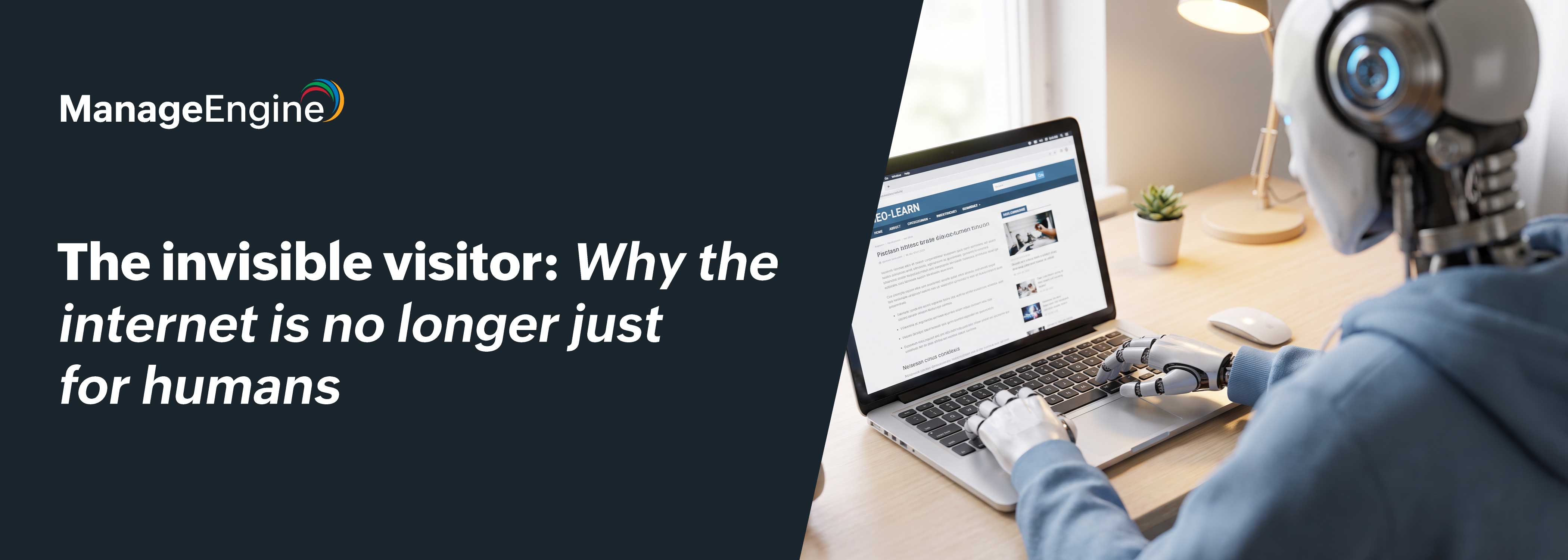
"Every website was once designed for people. That assumption is beginning to change."
For nearly three decades, the internet has worked in a predictable way. Whenever we wanted to know something, we searched for it, clicked through a few websites, compared information, and made a decision. Whether it was buying a new phone, planning a vacation, or researching software for work, businesses knew exactly how people behaved online. That's why they invested in search engine optimization, faster websites, engaging content, and intuitive designs, to make sure their websites stood out when people came looking.
Today, that journey looks a little different. Instead of opening 10 browser tabs, many of us simply ask an AI assistant for the answer. It might seem like a small change in habit, but it marks a much bigger shift in how information is discovered and consumed. According to the 2026 AI Index Report from the Stanford Human-Centered Artificial Intelligence Institute, AI adoption continues to accelerate across industries and everyday life, making AI assistants a regular part of how people search, learn, and work.
Wait... AI visits websites?
Think about the last time you asked an AI assistant to recommend a laptop, summarize a long report, or suggest a travel itinerary. Chances are, you didn't visit many websites afterwards. That's because the AI had already done the browsing for you.
AI doesn't magically know every answer. It gathers information from public websites, product documentation, help centers, research papers, and other online resources before generating a response. Increasingly, these systems are also evolving into AI agents that don't just answer questions but can perform tasks such as booking appointments, comparing products, or completing routine workflows. Microsoft's latest 2026 Work Trend Index highlights how organizations are moving from simply using AI assistants to working alongside AI agents that actively help complete work.
From search engines to AI agents
Search engines changed the internet by helping people discover websites. AI agents are beginning to change that relationship by becoming the layer between people and the web.
Imagine asking an AI assistant to find a hotel in Paris that fits your budget, has excellent reviews, and is close to public transport. Instead of showing you pages of search results, it may compare hundreds of listings and recommend just three. The research happens behind the scenes, saving you time and effort.
For businesses, however, this changes something fundamental. Their websites are no longer speaking only to customers. Increasingly, they're also providing information that AI systems interpret, summarize, and present to those customers. Often, a person's first impression of a company may come from an AI-generated answer rather than the company's homepage.
The rise of the invisible visitor
Unlike people, AI doesn't care whether a website has beautiful animations or eye-catching visuals. What matters is whether the information is clear, reliable, and easy to understand.
Think of it this way: if a customer visits your website, they might remember your branding or design. An AI assistant won't. Instead, it focuses on product specifications, documentation, FAQs, pricing information, and other structured content that helps it answer questions accurately.
This doesn't mean design is becoming less important. It simply means businesses now have two audiences instead of one, human visitors who appreciate a great experience and AI systems that value well-organized, trustworthy information.
AI traffic is already becoming a reality
The rise of AI assistants is changing something many businesses have relied on for years, website traffic. Traditionally, if someone wanted to learn about a product or compare services, they would visit a company's website, giving businesses valuable insights into what people were searching for and how they interacted with online content. Today, that journey is becoming less direct. As more people ask AI assistants to summarize information or recommend products, they may receive the answers they need without ever clicking through to the original website.
This shift is prompting organizations to rethink how they measure their digital presence. If an AI assistant accurately explains your product using information from your website, but the customer never actually visits your page, should that still count as successful engagement? Industry analysts are beginning to explore this question as AI-powered search and conversational interfaces become more common. Gartner, for example, predicts that traditional search engine traffic could decline significantly as users increasingly turn to generative AI for information, encouraging businesses to rethink how they create and measure digital content. Rather than focusing solely on page views or clicks, organizations may soon need to consider how effectively their content is understood and represented by AI systems.
Why this matters beyond websites
It's easy to think this is only a marketing issue, but the impact goes much further.
Customer support teams want AI assistants to explain their products correctly. Product teams rely on accurate documentation so that features aren't misunderstood. Sales teams benefit when AI compares their solutions fairly, while security and compliance teams need confidence that sensitive information isn't being exposed in the wrong way.
In other words, organizations are no longer communicating only with customers. They're also communicating with the intelligent systems that increasingly shape how customers discover and understand information.
Businesses may need a new kind of optimization
For years, businesses focused on helping search engines understand their websites. That won't disappear, but another priority is quietly emerging: making sure AI systems can understand their content just as accurately.
Fortunately, this isn't about writing for machines. It's about following practices that have always mattered—keeping documentation updated, using consistent terminology, publishing trustworthy information, and organizing content clearly. Businesses that invest in these fundamentals are more likely to become reliable sources, whether the reader is a person or an AI assistant.
The human still matters
Despite all these changes, people remain at the center of every important decision. AI can compare products, summarize information, and recommend options, but it doesn't replace human judgment, trust, or relationships.
A useful comparison is GPS. Most of us no longer memorize routes before driving somewhere new because navigation apps make the journey easier. Yet we still decide where to go, when to stop, and which route feels right. AI is beginning to play a similar role on the internet—it simplifies the journey without replacing the person making the final decision.
Looking ahead
The internet isn't becoming less human. It's simply gaining a second audience.
Alongside billions of people browsing the web every day, AI systems are quietly reading documentation, comparing products, summarizing articles, and helping users make decisions. Organizations that recognize this shift early won't need to reinvent their websites. Instead, they'll focus on something that has always mattered: publishing information that is accurate, transparent, and genuinely useful. In a world where AI increasingly becomes the first reader, those qualities may matter more than ever.